
 Home
Home (647) 779-5798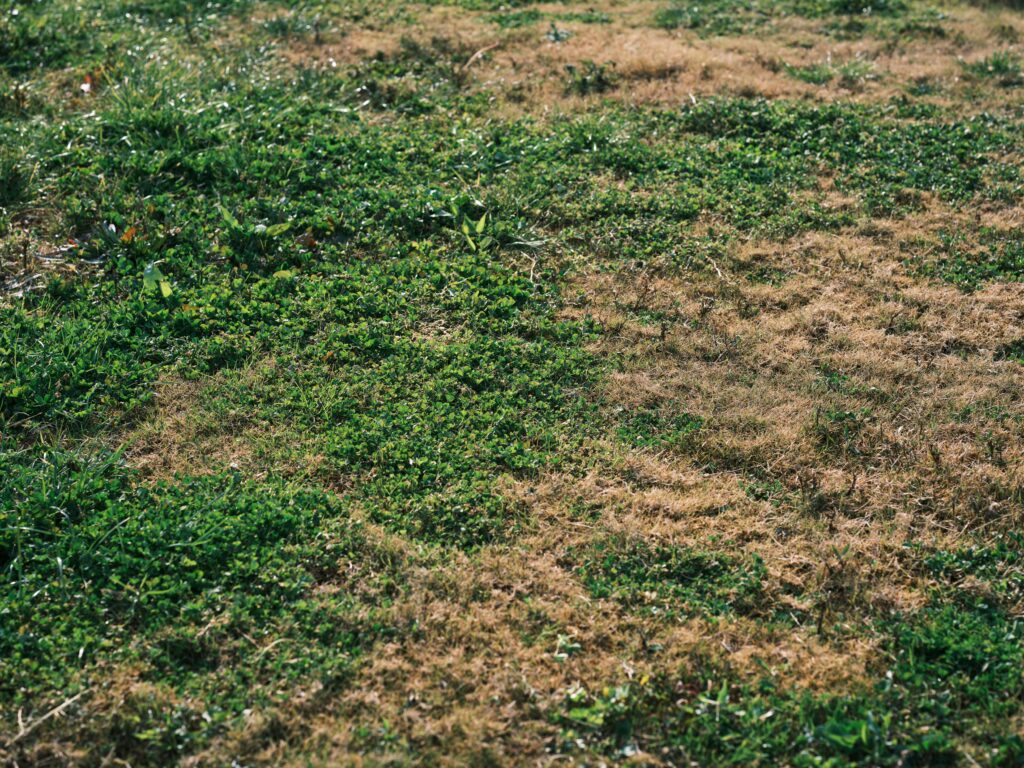
If your lawn was green and healthy in June but has started turning brown in August, you are not alone. Brown grass is one of the most common lawn problems Ontario homeowners deal with during the summer.
The good news? Brown grass in August does not always mean your lawn is dead. In many cases, your grass is simply responding to heat, drought, and other summer stresses by going dormant.
Ontario lawns are mostly made up of cool-season grasses, which can struggle when temperatures rise and rainfall becomes less consistent. During extended hot and dry periods, grass may turn brown to conserve water and energy. Once regular moisture returns, dormant grass can often green up again.
So before you tear out your lawn and start over, it is worth figuring out why your lawn turns brown in August and what you can do to help it recover. And for those who don’t want to do it themselves – ask the professionals!
Why Does Your Lawn Turn Brown in August?
There are several possible causes of brown grass in August. The most common are heat stress, drought, poor watering habits, mowing too short, compacted soil, insects, and lawn disease.
Let’s look at each one.
1. Heat and Drought Stress
The biggest reason lawns turn brown in August is often simple: your grass is not getting enough moisture to keep up with the summer heat.
Long stretches of hot weather increase evaporation and cause soil moisture to disappear quickly. Your grass responds by slowing its growth and conserving water.
Eventually, the blades can turn:
- Light green
- Yellow
- Blue-green
- Brown
- Dry and brittle
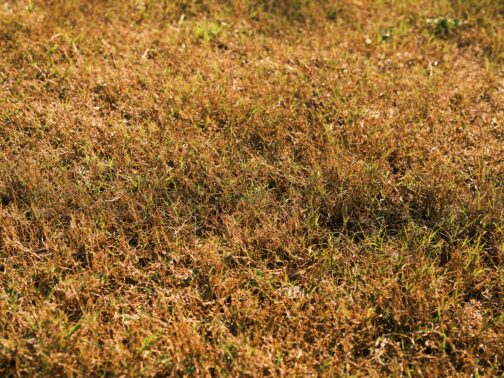
This is known as lawn dormancy.
A dormant lawn can look dead even though the crowns of the grass plants are still alive. Ontario’s turf guidance notes that dormant turf can green up again after rainfall, often within roughly 10 to 14 days once adequate moisture returns.
2. You’re Watering Too Often
It may seem like watering your lawn every day is the best way to keep it green during August.
It isn’t.
Frequent, shallow watering only wets the upper layer of soil. This encourages grass roots to stay close to the surface, where they are more vulnerable to heat and drought.
Instead, your goal should be deep and less frequent watering.
Ontario guidance generally recommends providing about 2.5 to 4 cm of water per week, including rainfall, when conditions are dry. Watering in the morning is also preferred because it reduces evaporation and gives the grass time to dry during the day.
How to Tell if Your Lawn Needs Water
Look for signs such as:
- Footprints that remain visible after walking on the grass
- Grass blades folding or curling
- A blue-green or greyish colour
- Dry soil several centimetres below the surface
- Grass that feels brittle under your feet
If you notice these signs, your lawn is likely under water stress.
3. You’re Cutting the Grass Too Short
Mowing your lawn extremely short during hot weather can make a bad situation worse.
Short grass has less leaf surface to produce energy and provides less shade for the soil. This allows moisture to evaporate more quickly.
Canada.ca recommends keeping grass around 6 to 8 cm (2.5 to 3 inches) during dry conditions because taller grass can develop deeper roots and retain moisture more effectively.
A slightly taller lawn can also help shade the soil and reduce weed pressure.
Follow the One-Third Rule
Never remove more than about one-third of the grass blade during a single mowing.
If your grass has grown too long, raise the mower height and gradually bring it back down instead of cutting off a large amount at once.
And keep your mower blades sharp. A sharp blade makes a clean cut, while a dull blade tears the grass and creates additional stress.
4. Compacted Soil Is Preventing Water From Reaching the Roots
Sometimes your lawn is brown even though you are watering it regularly.
If that sounds familiar, soil compaction could be part of the problem.
Compacted soil has fewer air spaces, making it harder for water, oxygen, and nutrients to move through the soil and reach the grass roots.
This is especially common in areas that receive a lot of foot traffic, such as:
- Side yards
- Play areas
- Paths across the lawn
- Areas near patios
- High-traffic backyard areas
How Lawn Aeration Can Help
Core aeration removes small plugs of soil from the lawn. This creates pathways for water, air, and nutrients to move into the root zone.
Late summer can be an appropriate time for aeration, particularly when followed by overseeding as conditions become more favourable.
If your lawn feels hard and compacted, aeration may be an important part of your lawn recovery plan.

5. Grubs and Other Lawn Pests
Not every brown patch is caused by drought.
If you see irregular brown patches, especially if the turf feels loose or lifts easily from the soil, insects such as grubs could be responsible.
August is an important time to inspect lawns for grub damage. Other clues include birds, skunks, or raccoons digging through the lawn looking for insects.
If watering does not improve the brown areas, take a closer look at the soil and roots rather than assuming the lawn simply needs more water.
6. Lawn Disease
Summer heat and humidity can also create conditions that encourage lawn diseases.
Disease is more likely to be the culprit when you see distinctive spots, rings, irregular patterns, or rapidly spreading patches rather than an evenly brown lawn.
Overwatering can also contribute to lawn disease problems. Watering in the morning rather than late at night helps grass blades dry during the day and can reduce prolonged leaf wetness.
If you are unsure whether you are dealing with drought, insects, or disease, getting the lawn properly assessed can save you from treating the wrong problem.
How to Fix Brown Grass in August
Once you identify the cause, you can start helping your lawn recover.
Step 1: Check Your Soil Moisture
Before turning on the sprinkler, check whether your lawn actually needs water.
Push a screwdriver or similar tool into the soil. If the ground is extremely hard and dry, your lawn may need a deeper watering.
Don’t automatically water every day.
Instead, aim to provide enough water to reach the root zone.
Step 2: Water Deeply and in the Morning
When your lawn needs water, water thoroughly rather than giving it a quick sprinkle.
A practical target during dry conditions is around 2.5 cm of water per week, including rainfall, although the exact amount can vary based on soil, weather, grass type, shade, and other conditions.
Water early in the morning whenever possible.
Avoid watering during the hottest part of the afternoon because more water can be lost to evaporation. Late-night watering can leave grass wet for longer and increase disease risk.
An Easy Way to Measure Water
Place a rain gauge or straight-sided container on your lawn while the sprinkler is running.
This lets you see how much water you are actually applying instead of guessing.
Step 3: Raise Your Mower Height
Give your lawn a break from aggressive mowing during August.
Raise your mower deck so you are leaving more grass behind. Taller grass helps shade the soil and can reduce moisture loss.
Remember the one-third rule: never remove more than one-third of the blade at a time.
Step 4: Reduce Unnecessary Foot Traffic
If your lawn is already stressed, try to avoid putting additional pressure on it.
Repeated walking, playing, parking, or other heavy use can compact the soil and further damage weakened grass.
Give severely stressed areas some time to recover.
Step 5: Don’t Immediately Fertilize a Severely Stressed Lawn
More fertilizer isn’t always the answer.
If your lawn is severely heat-stressed or dormant, pushing new growth at the wrong time can create additional stress. It is often better to focus on moisture and basic lawn protection first.
As temperatures moderate and the lawn begins actively growing again, late-summer and early-fall lawn care can become much more productive.
Step 6: Consider Aeration and Overseeding
Late August and early fall can be an excellent transition period for repairing a tired lawn in Ontario.
Aeration can relieve compaction and improve movement of water and air into the root zone. Overseeding can then help fill thin areas with new grass.
Ontario’s lawn guidance specifically identifies late summer as a good time to aerate, followed by topdressing and/or overseeding.
This can be particularly useful if your lawn has:
- Thin areas
- Bare patches
- Heavy foot traffic
- Compacted soil
- Weeds taking over weak areas
How to Tell if Brown Grass Is Dead or Dormant
This is one of the biggest questions homeowners have in August.
Brown does not automatically mean dead.
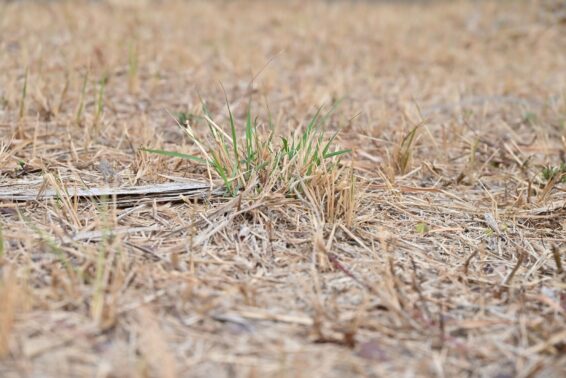
A lawn experiencing drought stress may go dormant as a survival mechanism. If the grass crowns remain alive, the lawn can recover when adequate moisture returns.
A simple way to investigate a questionable area is to gently pull on the grass.
If the turf is firmly rooted, that is a better sign than turf that lifts away easily. You can also look closely at the crowns and roots.
If an area remains completely brown after temperatures cool and moisture returns, it may have suffered permanent damage and require repair or reseeding.
What You Should Do With Your Lawn Right Now
If your lawn is brown in August, don’t panic.
Start with these steps:
Your August Lawn Recovery Checklist
- Check the soil moisture.
- Water deeply instead of lightly every day.
- Water in the morning whenever possible.
- Raise your mower height.
- Never remove more than one-third of the grass blade.
- Limit heavy foot traffic on stressed areas.
- Look for signs of grubs or other pests.
- Check for unusual disease patterns.
- Look for compacted soil.
- Plan aeration and overseeding as conditions become suitable.
- Avoid assuming every brown patch needs fertilizer.
- Give dormant grass time to recover when moisture and temperatures improve.
The goal isn’t necessarily to force your lawn to stay perfectly green through every hot, dry week.
The goal is to keep the grass healthy enough to recover when conditions improve.
When Should You Call a Professional?
If your entire lawn is evenly brown during a long dry period, drought stress or dormancy may be the most likely explanation.
But if you have isolated brown patches, rapidly spreading damage, turf that pulls up easily, or areas that don’t recover after rainfall, it may be time to have the lawn inspected.
A professional can help determine whether you are dealing with:
- Drought stress
- Soil compaction
- Grubs
- Lawn disease
- Poor drainage
- Improper mowing
- Nutrient problems
- Damaged or dead turf
Getting the cause right is important. There is no point spending money on new seed or fertilizer if the real problem is an underlying soil or pest issue.
Why August Is Actually a Good Time to Start Planning for Fall
August can make your lawn look its worst, but it can also give you a clear picture of what needs to be fixed.
Once summer stress begins to ease, conditions become more favourable for many cool-season lawn recovery tasks.
Aeration, overseeding, topdressing, weed management, and proper fertilization can help improve turf density and root health before winter.
Think of August as the lawn’s transition period.
Instead of simply trying to make brown grass green again, look at why it struggled in the first place.
If the soil is compacted, address it.
If the lawn is thin, overseed it.
If watering has been inconsistent, improve your irrigation habits.
If pests are responsible, identify the problem before treating it.
That approach will give you a healthier lawn next summer.
Final Thoughts
So, why does your lawn turn brown in August?
Most of the time, it comes down to summer stress. Heat, drought, shallow watering, mowing too short, compacted soil, pests, and disease can all contribute to brown grass.
The important thing to remember is that a brown lawn isn’t necessarily a dead lawn.
If your grass has gone dormant, proper watering and cooler weather may be enough to bring it back. Ontario guidance confirms that healthy turf can survive periods of dormancy during hot, dry weather and green up when moisture conditions improve.
With the right mowing, watering, aeration, and fall lawn care strategy, you can repair summer damage and set your lawn up for a much healthier growing season next year.
FAQs About Why Your Lawn Turns Brown in August And What You Can Do About It
Why does my lawn turn brown in August?
The most common reasons are heat, drought, insufficient soil moisture, mowing too short, soil compaction, pests, and lawn disease. In many cases, brown grass is dormant rather than dead.
Is brown grass dead or dormant?
It can be either. During prolonged heat and drought, healthy cool-season grass can enter dormancy to conserve energy and water. It may green up again after adequate moisture returns.
Should I water my brown lawn in August?
If the lawn is suffering from drought stress and local watering rules allow irrigation, deep watering can help. Avoid frequent shallow watering. Instead, water deeply and less often, preferably in the morning.
How often should I water my lawn in August?
There is no single schedule that works for every property. During dry periods, Ontario guidance generally recommends around 2.5 to 4 cm of water per week, including rainfall. Soil type, weather, slope, shade, and grass type can change how often you need to water.
Should I water my lawn every day when it is hot?
Usually, no. Daily light watering can encourage shallow roots. Deep, less frequent watering is generally better for established lawns.
What time of day should I water my lawn?
Early morning is generally the best time. It reduces evaporation and gives the grass time to dry during the day.
Should I mow brown grass?
If the grass is still growing, you can mow it, but raise your mowing height and avoid removing more than one-third of the blade at a time. Avoid aggressively mowing severely stressed or dormant grass.
Can mowing too short make my lawn turn brown?
Yes. Cutting grass too short reduces its ability to shade the soil and can increase moisture loss. Keeping grass somewhat taller during dry weather can help protect the lawn.
When should I aerate my lawn in Ontario?
Late summer or early fall can be a good time to aerate a cool-season lawn, particularly when the soil is suitable for removing cores. Aeration can improve the movement of air, water, and nutrients into the root zone.
Should I overseed a brown lawn in August?
Overseeding can be part of a late-summer or early-fall lawn recovery plan, but timing matters. Avoid throwing seed onto severely heat-stressed, bone-dry soil and expecting it to establish without adequate moisture.
How do I know if brown patches are caused by grubs?
Look for irregular brown patches, turf that lifts easily, and increased activity from birds, skunks, or raccoons digging in the lawn. These can be signs of grub activity.
Can too much water cause lawn problems?
Yes. Overwatering can contribute to poor growing conditions and disease problems. Water deeply and only when the lawn needs it rather than keeping the soil constantly wet.
How long does it take brown grass to turn green again?
If the grass is dormant rather than dead, it can begin recovering after adequate rainfall or irrigation. Ontario turf guidance indicates that dormant turf may green up in roughly 10 to 14 days after receiving sufficient moisture.
Does Sunready Landscaping provide lawn care services?
Yes. Sunready Landscaping provides landscaping and lawn-related services for homeowners looking to maintain and improve their outdoor spaces.
Can Sunready Landscaping help with a brown lawn?
A professional landscaping company can assess the condition of your lawn and help identify possible causes of brown or damaged grass. Sunready Landscaping can help homeowners determine what type of lawn care or landscaping work may be appropriate for their property.
Does Sunready Landscaping only work on lawns?
No. Sunready Landscaping provides broader landscaping services in addition to lawn-related work. Homeowners can contact the company to discuss their specific property and determine what services are appropriate.
Why should I hire Sunready Landscaping instead of trying to fix my lawn myself?
DIY lawn care can work for straightforward problems, but persistent brown patches can have several possible causes. Professional assessment can help you avoid spending money on treatments that don’t address the underlying issue.
If your lawn continues to struggle despite proper watering and mowing, contacting a professional landscaping company like Sunready Landscaping can help you develop a more targeted plan.
Ready to Bring Your Lawn Back?
A brown lawn in August doesn’t necessarily mean you need to start over.
With proper watering, mowing, soil care, pest monitoring, aeration, and fall lawn maintenance, many Ontario lawns can recover from summer stress and come back stronger.
If your lawn is struggling and you’re not sure why, Sunready Landscaping can help you figure out what your property needs and create a plan to get your outdoor space looking its best again.